
Multiplayer 2048 in one sentence
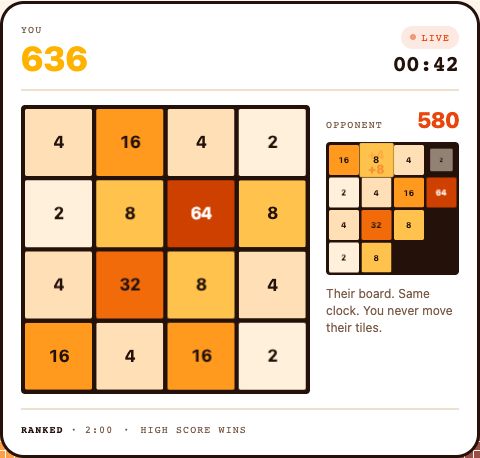
You and a matched opponent solve separate 4×4 boards against the same two-minute clock, and the higher score when time expires wins. You can see the other board and score, but your moves never slide or merge its tiles.
What both sides share
The clock starts for both boards and the match ends for both sides. Each side earns points from its own merges. If one board fills before time expires, the other can continue until the match itself ends.
That makes the match a race, not a turn-taking game. You do not wait for the other side, and fast input only helps when it leaves a board you can keep solving.
- Two independent boards: neither side controls the other's tiles.
- One shared timer: ranked matches last two minutes.
- One result: the higher final score wins; equal scores draw.
Ranked matches and ratings
The public queue looks for the waiting player closest to your rating. Everyone starts at 1,000. When a ranked match settles, both ratings move based on the result and the players' ratings before the match.
The leaderboard is ordered by rating rather than by one high-scoring solo game. You need an account for ranked play because the match result and rating have to stay attached to the same player.
How to play 2048 with a friend
Create a private game, copy its invite code, and send that code to your friend. They join the private match instead of entering the public queue. Both players need to sign in, while solo modes remain available to guests.
For a first match, play without attack power-ups. Once both players are comfortable with the two-board pace, enable power-ups for moves that can affect the opponent's view or board state.
A better multiplayer approach
Watch the opponent rail for context, not for every move. Your own board still needs most of your attention. A small early score lead is less valuable than a board with open cells and a stable largest-tile corner.
When the clock is low, shift from long-term setup to safe scoring. Take available merges, avoid board-locking moves, and remember that the final total—not the largest single tile—decides the match.